
Warehouses, workspace and a late licence
Commercial building maintenance in Shoreditch
Victorian furniture warehouses turned into offices, bars underneath, flats above, and a workspace market that refits every eighteen months. Shoreditch buildings are characterful, and they fail in characterful ways.
The building stock: a furniture district turned tech district
Shoreditch is the southern tip of Hackney, hard against the City boundary, and most of its commercial stock was built for the furniture and printing trades that filled the area in the second half of the nineteenth century. The warehouses along Curtain Road, Great Eastern Street, Rivington Street and Charlotte Road were converted into open-plan offices from the mid-1990s onwards, and their exposed brick, cast-iron columns, timber floors and tall Crittall windows are now the reason tenants want them. Much of this stock sits inside the South Shoreditch Conservation Area, which shapes what can be done to the outside of a building and how.
Around Old Street roundabout the picture is different: the Tech City cluster brought new and comprehensively refurbished office buildings with modern plant, and workspace operators now run whole buildings as managed or coworking floors. The third layer is at ground level. Shoreditch has one of the densest concentrations of bars, restaurants and late venues in London, most of them trading under offices or flats.
A converted warehouse, a modern Grade A floor and a bar with a residential upper are three different maintenance problems, and one building here can be all three.
Who is buying in Shoreditch
The landlords are rarely institutions. Shoreditch stock is held by private freeholders, small property companies and family trusts, often with no building manager and a keyholder arrangement in place of a reception desk. Sitting between them and the occupier is a growing layer of workspace operators who lease whole buildings and sublet by the desk or the floor. They buy maintenance the way a hotel does: fast, visible and tied to a member experience, with a refit whenever a floor turns over.
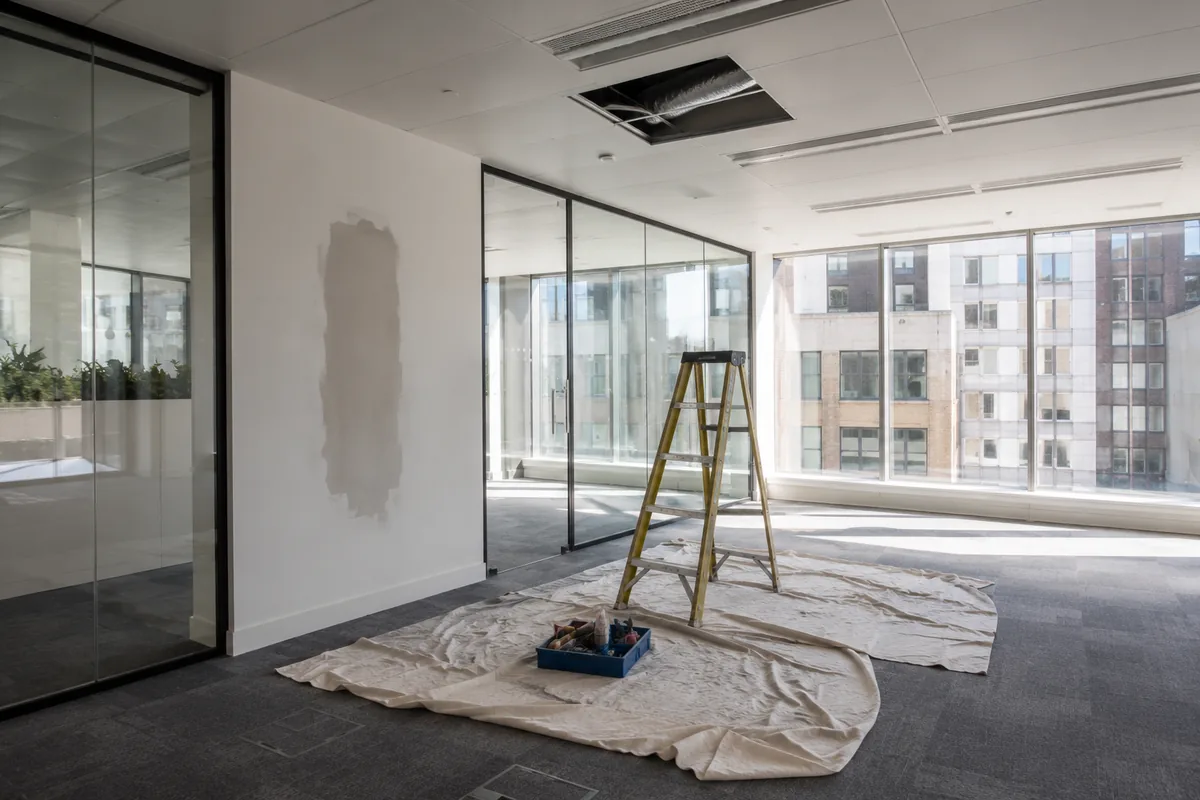
The occupiers are technology, design, media and agency businesses on short leases, and churn is high. That means a constant stream of fit-out making-good, partition moves, cabling changes and decoration, as well as the dilapidations that follow a tenant out. The ground-floor operators are bar and restaurant groups whose maintenance needs are covered on the hospitality sector page, but whose plant, extract and drainage share walls and risers with the offices above.
Access, hours and the neighbours
Shoreditch works in two shifts and both of them constrain the other. Offices want disruptive work early in the morning or at the weekend. Bars and venues underneath want it after close, which in a Special Policy Area now means new licences end at eleven on a weekday and midnight at the weekend, with older premises trading later. Residents above both have already complained about noise once, and Hackney takes that seriously.
The usable windows are therefore early mornings before the offices fill, Sunday daytimes, and the short gap between a bar closing and its morning delivery. Converted warehouses rarely have a goods lift, so materials go up the stairs, and keyholding and alarm codes replace a security desk. All of that is recorded per building before the first visit, because the second visit is usually a reactive one.
Parking and permits
Shoreditch’s side streets are Hackney controlled parking zones that operate at set hours, and the main roads through the area are enforced around the clock. A dispensation from Hackney covers one parking space for one day and has to be applied for ahead of the visit, which suits planned work and does not suit a Saturday night call-out. The area is inside the Ultra Low Emission Zone.
In practice reactive engineers carry what they need from the nearest legal stop, and planned work with materials is booked against a dispensation in advance. Narrow streets, loading restrictions and the lack of goods lifts mean deliveries are broken down to what will go up a Victorian staircase.
What fails in Shoreditch buildings
Converted warehouses fail at the envelope and in the services that were threaded through them thirty years ago. Flat roofs and parapet gutters shared with the building next door block and back up. Single-glazed Crittall windows leak air and water and cannot be replaced like for like without care in a conservation area. Original cast-iron soil stacks corrode behind plasterboard. Split air conditioning added one floor at a time fails one unit at a time, and nobody has a drawing. Timber floors flex under modern loads and the partitions above them crack. Electrical boards from an earlier conversion run out of ways when a floor is refitted for a denser occupier.
Where a bar sits under an office, the failures cross the boundary: kitchen extract routed up a shared shaft, grease in a shared drain, compartmentation between the licensed premises and the floors above, and fire doors in a common stair that both tenants use and neither owns. Shopfronts, glazing and signage at street level take the damage a late-night district hands out.
Related pages
The sectors and services that apply in Shoreditch.
Common questions
Questions we get asked in Shoreditch.
Can you work early mornings and Sundays rather than evenings?
Yes, and in Shoreditch it is often the only sensible plan for office floors that sit above bars or flats. The programme is built around the building’s real quiet window, not a standard one.
Do you deal with the bar downstairs as well as the offices upstairs?
Yes. Where the same building has licensed premises at ground floor and offices above, one contract covers both, so that shared extract, drainage, compartmentation and fire doors are looked after by one contractor rather than argued over by two.
Our building has no goods lift and no reception. Is that a problem?
No, it is normal here. Keyholding and alarm codes are recorded before the first visit, and materials are sized to go up the stairs. Anything heavier is planned with a dispensation and a delivery slot.
Can you handle the making-good when a tenant moves out?
Yes. Dilapidations, partition removal, decoration and floor repairs are batched into one visit where possible, and flooring and larger reconfiguration go through the group’s flooring and refurbishment companies without a second procurement.
Do you work in the South Shoreditch Conservation Area?
Yes. Repairs to the outside of a building are done in a way that respects the conservation area, and anything that would change the appearance of the facade or the windows is flagged before it starts so the freeholder can decide whether consent is needed.
Also covered from here
Neighbouring areas.
Hoxton, Old Street, Haggerston, Dalston, Bethnal Green, Spitalfields, Clerkenwell, Liverpool Street and the City fringe, and the rest of Hackney.
Book a walk round
Tell us about the building in Shoreditch.
What it is, where it is, and which part of running it is causing the pain. We walk it, write down what is there, and come back with a scope and a price.