
Listed on almost every street
Commercial building maintenance in Westminster
Westminster has more listed buildings than any other London borough, the most expensive office floors in the country and hotels that never close. Maintenance here has to respect the fabric, the guests and the parking rules, all at once.
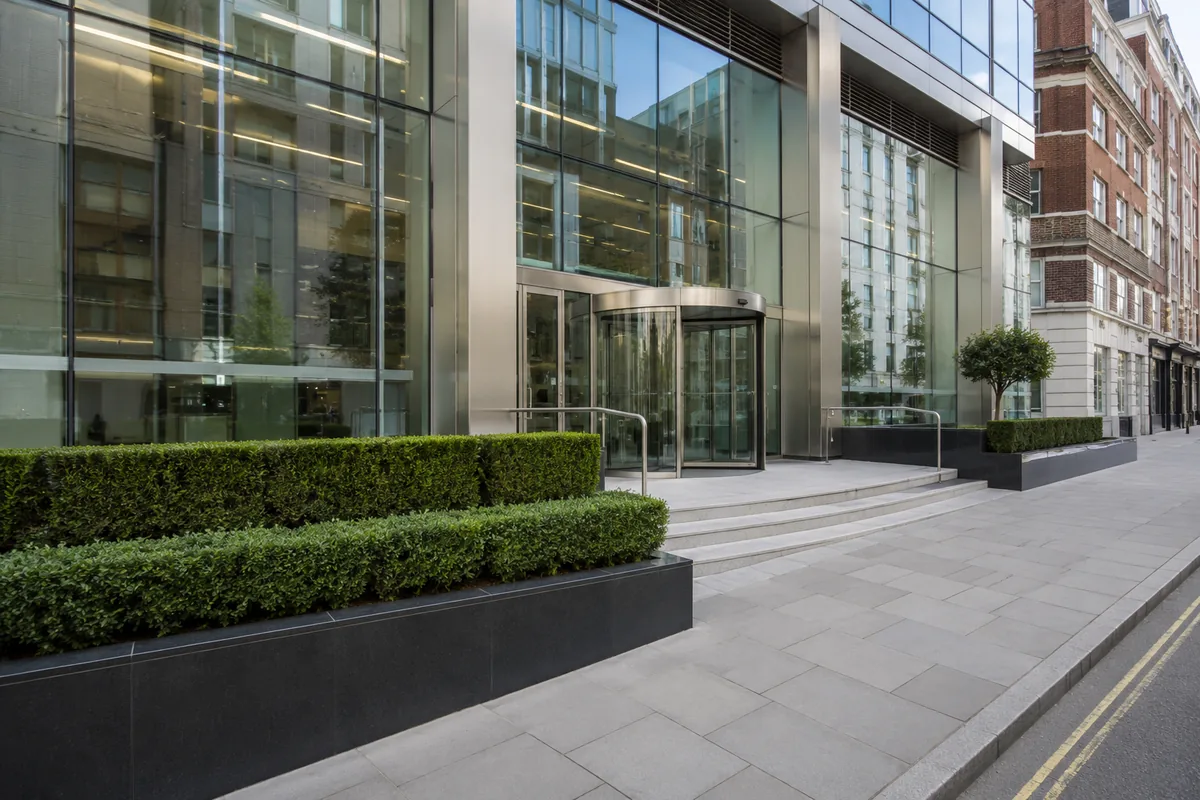
The building stock: heritage with a service charge
Westminster holds around eleven thousand listed buildings and structures, more than any other borough, and a large share of its commercial floorspace is inside them. The West End office core across Mayfair, St James’s, Marylebone and the Westminster side of Fitzrovia is largely Georgian and Victorian townhouses and mansion blocks converted to offices floor by floor, with the highest rents in the country and financial, legal and professional occupiers who expect the building to behave like a new one. Behind the facades are small lifts, narrow stairs, lightwells, valley gutters and services that have been renewed several times inside fabric that cannot be touched without consent.
Victoria is the exception: its 1960s and 1970s blocks have been redeveloped or refurbished wholesale over the last fifteen years into large modern floors with modern plant. Soho is mixed-use on every street, with restaurants and bars at ground floor, post-production and media offices above, and flats above those. Oxford Street, Regent Street and Bond Street carry the borough’s retail. Around Whitehall sits the government estate, and across Park Lane, Mayfair, Marylebone and Victoria sits the densest concentration of hotels in the capital, at their busiest through the summer. The council’s own plan resists the loss of offices to homes or hotels, so the office stock is staying and being refurbished rather than replaced.
Who is buying in Westminster
The freeholds behind much of the West End belong to a small number of large landed estates and institutional owners with their own surveyors and building managers, who set a high bar on how repairs are specified and who does them. Sitting beneath them are managing agents running multi-let period buildings on service charges, with the usual questions of who owns the roof, the risers and the lightwell.
Hotels buy differently. Most have an in-house engineering team and bring in a contractor for the trades they do not carry, for planned servicing at scale, and for reactive cover overnight. Restaurant and bar operators in Soho buy the hospitality pattern: kitchens, extract, cellars and washrooms, after close. Retailers on the main streets buy around trading hours. A single contract in Westminster can therefore touch four different buying patterns on one street.
Access, hours and heritage consent
Hotels never close, so work there is zoned floor by floor and room by room, with rooms taken out of sale in small blocks agreed with the front desk and anything that affects guests planned with a fallback before it starts. Offices want disruptive work in the evening or at the weekend, but in Marylebone and Soho there are flats above and the council’s noise rules apply after hours as well as during them. Soho’s late licences shift the bar window into the small hours, and the theatre district adds its own timetable to the streets around it.
Heritage consent is the constraint that makes Westminster different from anywhere else in London. In a listed building, like for like repair is the default and anything beyond it is flagged before it starts so the owner or agent can decide whether listed building consent is needed. That applies to windows, roofs, railings, internal joinery and sometimes to the route a new pipe takes. A contractor who does not know the difference creates a planning problem for the landlord.
Parking and permits
The whole borough sits inside the Congestion Charge and Ultra Low Emission zones, and kerbside space is the most contested in London. A yellow line dispensation from Westminster City Council needs at least three days’ notice, is charged per vehicle per day at a rate that rises after the fifth day, and runs for up to seven continuous days at a time. Parking bay suspensions for building works carry a short-notice fee if booked inside ten days. Pay-to-park charges are emissions based.
For reactive work this means engineers arrive with what they can carry and park where they legally can. For planned work it means dispensations and suspensions are booked into the programme, priced in from the start rather than passed on as parking tickets, and deliveries are timed for early morning before the streets fill.
What fails in Westminster buildings
Period townhouses fail at the roof and the ground. Slate roofs, valley gutters, parapets and lead flashings let water into top floors. Lightwells and basement areas flood when their drains block. Basement kitchens in Soho restaurants push grease and heat into drainage and shafts never designed for them. Sash windows rot and stick, original risers corrode, and small hydraulic or traction lifts in converted houses are the single point of failure for an occupier on the fourth floor.
Hotels fail under continuous load. Hot water and heating plant runs all year without a season to rest in, air conditioning serves rooms that are occupied around the clock, and washrooms and wet rooms take hotel use in every room every day. Fire doors, emergency lighting and compartmentation in a converted townhouse hotel are the compliance items that most often lapse. Victoria’s modern blocks fail like any large modern office, at the fan coil, the control valve and the sensor tap. The planned schedule for a Westminster portfolio is built around these patterns, not around a generic calendar.
Related pages
The sectors and services that apply in Westminster.
Common questions
Questions we get asked in Westminster.
Do you work in listed buildings, and do you know when consent is needed?
Yes. Repairs are like for like where the listing requires it, and anything that would alter listed fabric, inside or out, is flagged before it starts so the owner or managing agent can decide whether listed building consent is needed. Surveying sits within the same group where a record of the fabric is needed first.
How do you work in a hotel without disturbing guests?
Floor by floor and room by room. Rooms come out of sale in small agreed blocks, plant work is timed for the low-occupancy hours of the day, and anything that touches hot water, heating or lifts has a fallback in place before it begins. Reactive cover runs overnight because the hotel does.
Who pays for the parking?
We do, and we price it in. Dispensations and bay suspensions are booked into the programme for planned work at the council’s published rates, so the cost is visible in the quote rather than arriving afterwards as a list of penalty notices.
Can you cover offices, a hotel and restaurants on the same contract?
Yes. Each site keeps its own hours, access arrangements and response bands, and the contract holder gets one report and one invoice across all of them. In Westminster that mix on a single street is common rather than unusual.
Do you work in Soho after the bars close?
Yes. For licensed premises the window after the last cover and before the morning delivery is the standard slot for anything disruptive, and quiet work is done during prep so night rates apply only where they are needed. Where flats sit above, the council’s noise rules are built into the plan.
Also covered from here
Neighbouring areas.
Mayfair, Soho, St James’s, Victoria, Marylebone, Fitzrovia, Covent Garden, Belgravia, Pimlico, Paddington and the Knightsbridge boundary.
Book a walk round
Tell us about the building in Westminster.
What it is, where it is, and which part of running it is causing the pain. We walk it, write down what is there, and come back with a scope and a price.